
Creating Art
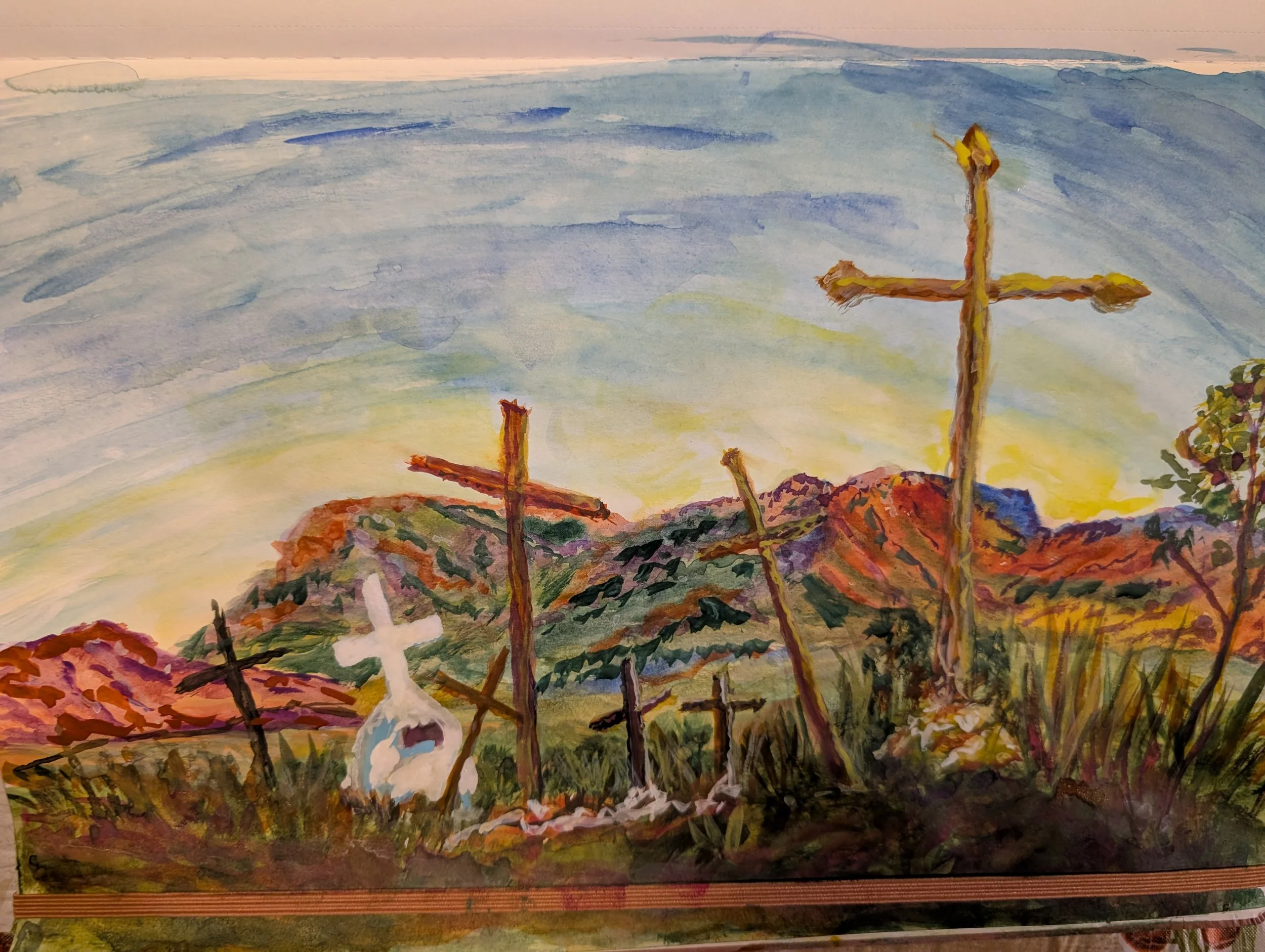
We, human beings, are more than our circumstances. Art is one of many paths to hope, seeing and communicating our place in the world, and creating value that enriches our lives.
A Path to Hope
In these times, we stand witness to deliberate violence and cruelty that echo some of the darkest periods in our history—the post-Reconstruction era, the enforcement of Jim Crow laws, and the state-sanctioned terror that led to the Civil Rights Movements of the 1950s and 1960s. This unrest is rooted in fear—a pervasive fear that grips not only those in power but also the marginalized communities who endure the consequences of systemic oppression. Yet, beyond these external conditions lies a profound truth: every human being possesses an inherent worth that transcends circumstance.
To be defined beyond one's circumstances is to recognize the breath of life that inhabits each of us—a gift from the Creator God, the great "I am," or, for some, the universe and creation of which we are an integral part. This inherent value is not something given or taken by the shifting tides of external realities; it is a fundamental essence that withstands the weight of hardship and injustice.
Every day, we witness acts that seek to dehumanize—masked and armed groups abducting neighbors, divisions sown based on skin color, language, location, employment, or whom one loves. These actions attempt to relegate people to a lesser status, to strip away identity and dignity. Yet the truth remains immutable: external conditions cannot define the soul’s worth.
Philosophy and faith alike assert the power of choice and the indomitable human spirit to transcend adversity. Jean-Paul Sartre reminds us, "Man is not the sum of what he has already, but rather the sum of what he does not yet have, of what he can still acquire." This existential idea—that existence precedes essence—calls us to define ourselves through our actions and choices rather than the circumstances into which we are born. Viktor E. Frankl, who endured the Holocaust’s horrors, articulated the last human freedom with clarity, “Everything can be taken from a man but one thing: the last of human freedoms—to choose one's attitude in any given set of circumstances, to choose one's own way.” Thomas Szasz reinforces this, “People often say that this or that person has not yet found himself. But the self is not something one finds, it is something one creates.”
From the Stoic tradition, we hear Epictetus’s assertion, “Circumstances do not make the man, they only reveal him to himself,” and from the more contemporary voice of Stephen R. Covey, “I am not a product of my circumstances, I am a product of my decisions.” James Allen deepens this insight: “Man is buffeted by circumstances so long as he believes himself to be the creature of outside conditions, but when he realizes that he is a creative power... he then becomes the rightful master of himself.” These words illuminate a universal truth: our inner character, fortified by intentionality and freedom, is what ultimately shapes who we are.
Scripture offers a profound foundation for understanding the soul’s eternal value, contrasting the fleeting nature of external fortunes with the infinite worth of the inner self in relation to the divine. The Gospel of Matthew warns, “For what will it profit a man if he gains the whole world and forfeits his soul? Or what shall a man give in return for his soul?” (Matthew 16:26, KJV). The soul transcends physical existence, as also affirmed in Matthew 10:28: “Do not fear those who kill the body but cannot kill the soul. Rather fear him who can destroy both soul and body in hell.” This separation of the soul from temporal conditions points to a deeper identity rooted in spiritual reality.
In 2 Corinthians, the Apostle Paul inspires with words of enduring resilience: “Therefore, if anyone is in Christ, he is a new creation. The old has passed away; behold, the new has come” (2 Corinthians 5:17). This new creation represents a selfhood no longer shackled by past circumstances but reborn into freedom and hope. Paul continues, “We are afflicted in every way, but not crushed; perplexed, but not driven to despair; persecuted, but not forsaken; struck down, but not destroyed” (2 Corinthians 4:8–9). Here lies a testament to inner strength and perseverance—a beacon for those navigating hardship.
Consider the identity of “the least of these” in Jesus’ time—lepers, widows, prisoners, shepherds, tax collectors—figures marginalized not only by the oppressive Roman Empire but also by religious and social elites. Today, echoes of this contempt are heard in disdain toward those of diverse faiths, ethnic backgrounds, and lifestyles, as well as those who reject conformity. The exiled and oppressed still walk among us, carrying stories of resilience that demand our attention and respect.
In embracing faith or spirituality, there is both danger and hope. Scripture has at times been wielded as a tool of division, but its deepest truth calls us toward unity, compassion, and liberation. The path to hope is one that acknowledges this complexity but refuses to surrender to cynicism.
History bears witness to countless examples of human resilience. Enslaved people whose songs whispered joy and love despite chains. Anne Frank, whose diary gives voice to a child’s suffering and hope amid hiding and loss. Women who defied societal constraints through art and writing, claiming life and expression on their own terms. These stories are powerful counterpoints to the narrative of victimhood; they embody resistance, humanity, and the undying spark within us all.
This project seeks to weave together philosophy, literature, and scripture into a tapestry that reveals the potential within every human being—the spark of life and creation. Across centuries, human spirit has battled oppression: enslavement, holocaust, purges, and systemic repression. Yet it powers through. This enduring spirit, expressed in courage and creative resistance, is a force that will ultimately defeat oppression.
The emotions I hope to evoke are thoughtful curiosity and a renewed awareness of our shared history. Recognizing what humanity has collectively achieved—overcoming concentrated power to establish representative democracy and steadily inch toward inclusivity—allows us to find hope despite current divisions. Elections matter because every person matters, and the avoidance of participation only sows further discord. Building alliances, discovering common ground, and advancing solutions rooted in shared humanity are the antidotes to the fractures we witness today.
The call to action is clear: live a good life on your own terms. Embrace life’s fullness—its joys, challenges, and imperatives—and advance the cause of liberty and freedom for all. Empowerment comes not from denial of hardship but from recognizing and asserting the inner worth and freedom that belong to each person.
Remember always the truth embraced across scripture, literature, and philosophy: you are not defined by your circumstances. As Sartre reminds us, there is always more for us to become through our choices. As Frankl teaches, your attitude remains your last unyielding freedom no matter the trials you face. As Scripture promises, your soul holds an eternal value that no external force can diminish.
In this recognition lies the path to hope.
Contact us
Interested in working together? Fill out some info and we will be in touch shortly. We can’t wait to hear from you!